

Platform

Cascade3

The most powerful flow analysis platform ever created for horizontal well systems

The most powerful flow analysis platform ever created for horizontal well systems

Made by experts for experts, Cascade3 builds on two decades of practical knowledge and experience applying science and mathematics to solving the most complex downhole flow scenarios.

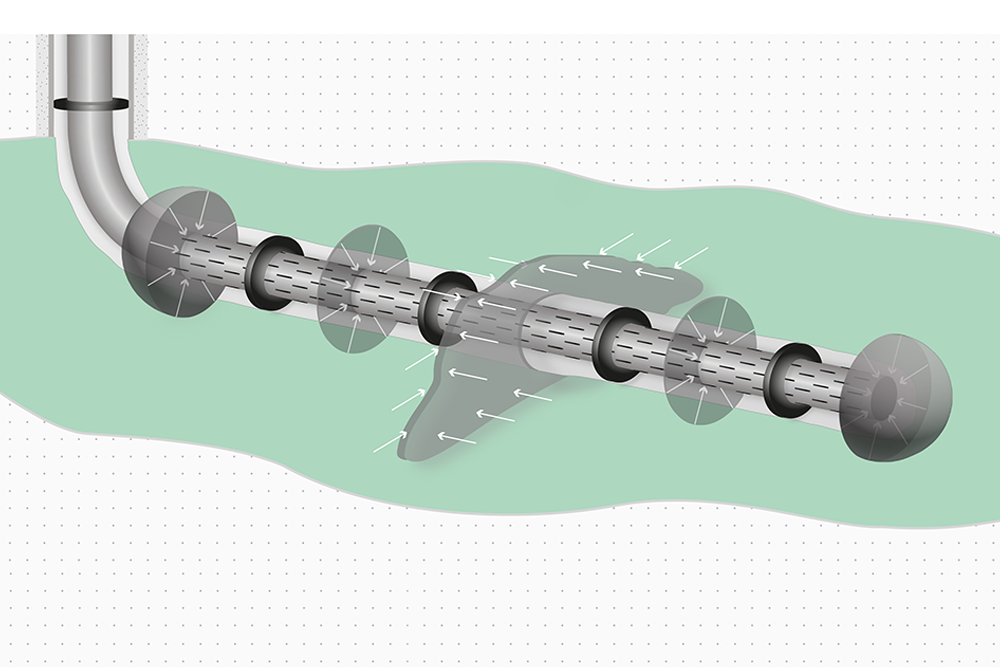
Incorporating the industry’s most advanced thermodynamic and hydrodynamic modelling codes, Cascade3 transforms temperature, pressure, and other well system data into continuous reservoir flow profiles. Crucially, the flow profiles reflect flow activity in and out of the reservoir, delivering the truest picture possible of reservoir behaviour and inflow/outflow downhole.

The new Horizontal Flow diagnostics powered by Cascade3 overcomes many of the challenges faced by conventional production surveys, delivering a more reliable and complete assessment of flow dynamics in horizontal wells in a wider range of completion scenarios. Equipped with the right information, asset teams can take direct action to keep well and reservoir performance on track.

Cascade3 brochure ↓
Cascade3

Modelling

At the heart of Cascade3 is Torrent – a remarkable modelling and simulation engine that predicts the hydrodynamic and thermodynamic behaviour of fluids and their surroundings as they flow through the well-reservoir system.

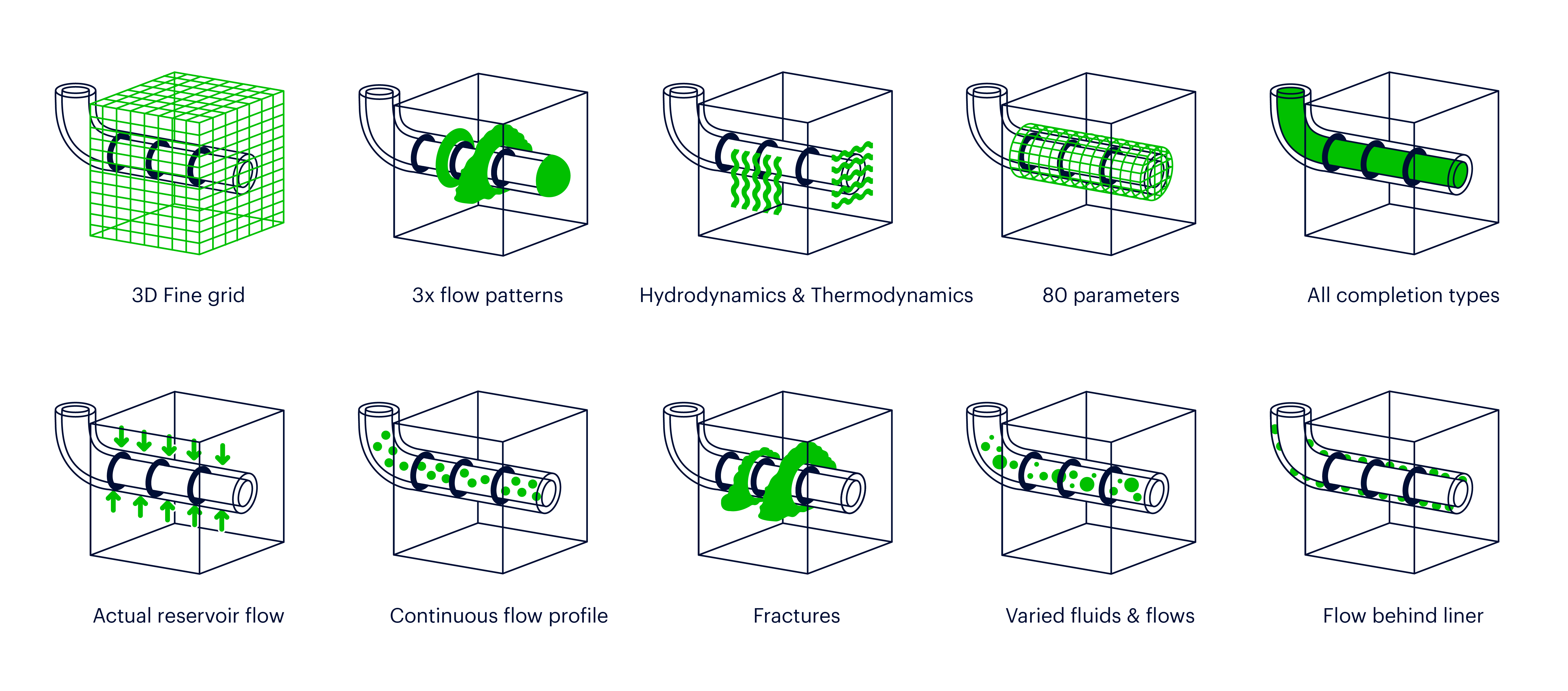
Torrent features a unique 3D fine-grid modelling framework and can simultaneously solve three distinct flow geometries – radial, spherical, and linear in fractures – reflecting the three main types of flow that occur in a horizontal well system. Apart from providing a more realistic flow modelling environment, these features mean that Cascade3 delivers accurate continuous flow profiles in a wide variety of completion and reservoir settings, including fractured formations.

Features

Cascade3 platform features

Benefits

Production and Reservoir Engineers depend on downhole flow profiles to manage well and reservoir performance. Conventional wellbore production surveys can only sense certain flows entering the well completion and cannot measure inflow/outflow where it matters most – at the reservoir behind the completion. Also, even wellbore flow profiles can be compromised in open hole, and by viscous fluids, low flow rates and the complex flow regimes that occur in horizontal wells. Incorrect flow profiles can lead to missed opportunities and poor well and field management decisions.

Horizontal Flow with Cascade3 solves many of the diagnostic challenges faced by Reservoir and Production Engineers, providing them with the flow insights they need to reduce operating costs and energy consumption, and increase ultimate recovery.

Cascade architecture

Programmes & methods

Analysts using Cascade3 follow a systematic workflow that starts with defining a survey programme to meet objectives. This stage includes data gathering to collect information about the well and the reservoir. Up to 80 inputs are collected including the well history, completion details, reservoir and fluid ‘PVT’ properties, pressure, and geothermal gradients. The data is used to build the hydrodynamic and thermodynamic models in Torrent and inform the survey programme.

The survey programme is designed to capture critical well and reservoir performance data as the well system is activated in various flowing and non-flowing states over specific time periods.

Tools & measurements

In this second stage of the diagnostic workflow, proprietary tools are deployed into the well, including Indigo high-precision temperature, Chorus spectral acoustics plus other flow and fluid related sensors. This stage can span several days depending on the complexity of the well system and customer objectives.

Processing & modeling

Analysts integrate all data into the model to refine and compare simulated outputs with actual measurements. Torrent will compute several key outputs according to model parameters, including simulated temperature and pressure profiles and critically, a continuous reservoir flow profile.

The analyst adjusts key model parameters until there is a robust match between the measured and simulated wellbore temperature and pressure. Parameters that are known with great certainty are not adjusted. When a realistic match is achieved, the flow profile output becomes the definitive answer.

Analysis & interpretation

This stage overlaps with the processing and modelling stage. The analyst will balance their observations, experience, and expert judgement to iterate the model as appropriate until a coherent and robust answer is delivered.

Products

Analyst insights, answers and commentary are packaged into the final Horizontal Flow answer product for personal delivery to the customer’s asset team.

Platform partners

Cascade3 works alongside three other technology platforms—Chorus, Indigo and Maxim, that together constitute the True Flow diagnostic system. Each platform has a specific role in providing Horizontal Flow insights.

Whereas Cascade3 quantifies flow activity by modelling and simulating temperature and pressure changes in the well system, Chorus locates and characterises flow activity by sensing and imaging acoustic energy. For example, Chorus data can help the analyst distinguish between wellbore flow, reservoir or matrix flow and fracture flow, and provide a clear indication of active zones. And both temperature and acoustic data can help distinguish between liquids and gas.

Multisensory Indigo provides a host of wellbore measurements, including high-precision temperature that feeds into Cascade3, pressure, and a range of standard and unique production sensors, as well as real-time data transmission to the surface. Maxim is the digital workspace where analysts plan the diagnostic programme, integrate, and process the acquired data, perform the modelling and the in-depth analysis delivered in the final Horizontal Flow answer product.

Let us know how we can help

Talk to our team about Cascade3 and Horizontal Flow diagnostics.

Contact us